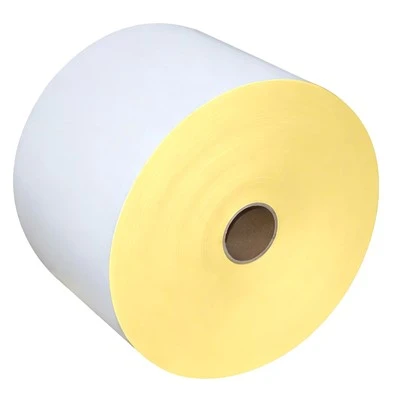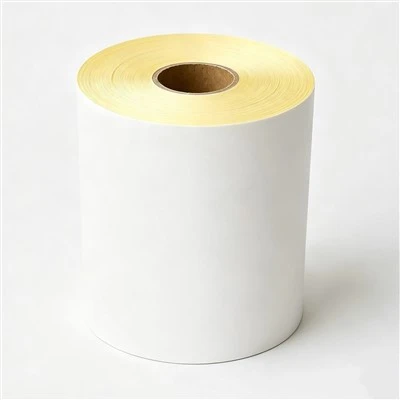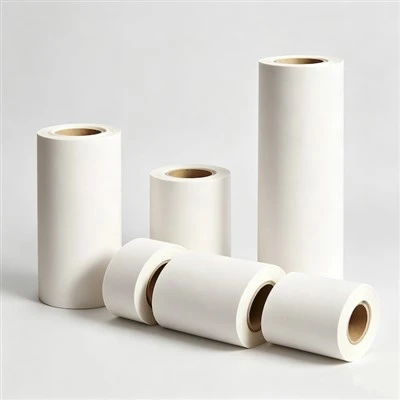


Thermal transfer ribbon is a core consumable used in thermal transfer printing technology. It is mainly applied in barcode printers and label printers, where heat is used to transfer ink from the ribbon surface onto label materials, creating accurate text, graphics, barcodes, and QR codes. As an essential component of label printing systems, thermal transfer ribbon affects not only print quality but also information durability, recognition accuracy, and overall label performance.
The primary function of thermal transfer ribbon is to achieve high-quality information printing. During the thermal transfer process, the printhead applies controlled heat to the ribbon, causing the ink layer to melt and transfer onto the label surface. This creates clear and stable printed content. Compared with conventional printing methods, thermal transfer ribbon provides finer text and graphic output, making it especially suitable for identification information requiring high accuracy, such as barcodes and QR codes.
Another important function of thermal transfer ribbon is maintaining long-term information preservation. Because thermal transfer ribbons use specially formulated inks, printed information has excellent stability and is less likely to be damaged by friction, moisture, or environmental changes. Therefore, thermal transfer ribbons improve label reliability in applications requiring long-term data retention, including equipment management, product traceability, and logistics operations.
Thermal transfer ribbon also enhances label durability. Different ribbon types can be selected according to specific application environments. Wax ribbons are suitable for standard paper labels and meet common product and logistics labeling needs. Wax-resin ribbons provide a balance between print quality and durability for applications requiring moderate resistance. Resin ribbons offer stronger resistance to scratches, high temperatures, and chemicals, making them suitable for industrial equipment, electronic components, and other demanding environments.
Improving production efficiency is another important function of thermal transfer ribbon. In automated label printing processes, stable ribbons ensure consistent printing performance and reduce issues such as unclear printing or ribbon breakage. When high-quality ribbons are used with suitable printing equipment, maintenance requirements can be reduced and printhead service life can be extended.
In addition, thermal transfer ribbon supports printing on various label materials. Through different ink formulations and coating technologies, ribbons can be used with materials such as coated paper, PET, PVC, and PP labels, allowing businesses to select suitable printing solutions based on product characteristics and application conditions.
With the development of smart manufacturing, digital management, and automatic identification technologies, the functions of thermal transfer ribbon continue to expand. When combined with barcodes, QR codes, and smart label technologies, ribbon-printed labels can support product tracking, data collection, and information management, helping businesses improve operational efficiency.
Overall, the main function of thermal transfer ribbon is not only to print label information but also to enhance label clarity, durability, and management value. By selecting the appropriate ribbon type, businesses can achieve more efficient, stable, and accurate identification management solutions.