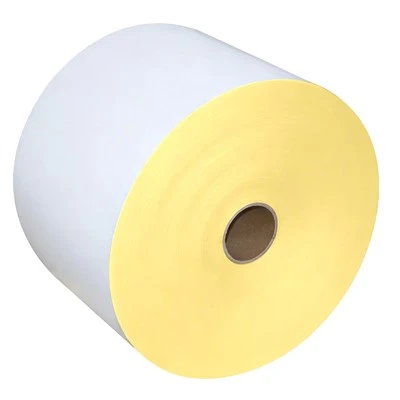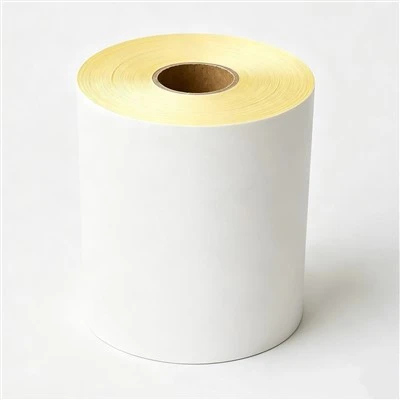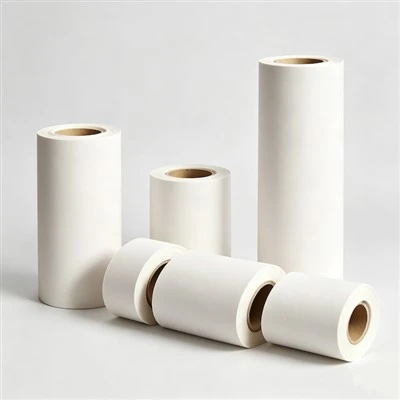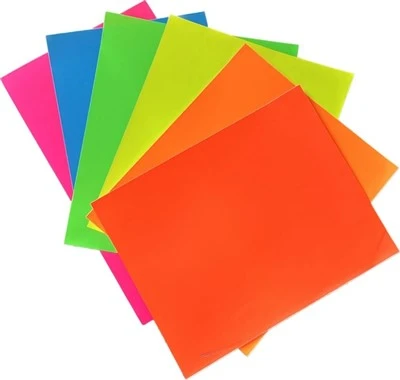


Self-adhesive paper is a widely used material in the modern labeling industry, and its excellent performance is closely related to its unique structural design. Compared with traditional labeling materials, self-adhesive paper adopts a multi-layer composite structure. The different layers work together to provide reliable adhesion, high-quality printing performance, and long-term usability, making it suitable for packaging, logistics, electronic products, and industrial manufacturing applications.
Self-adhesive paper generally consists of three main components: the face material, adhesive layer, and release liner. Each layer performs a specific function to ensure overall performance. The face material is the outer layer and serves as the main surface for displaying printed information. Depending on application requirements, different materials such as coated paper, thermal paper, PET, and PVC can be selected. The face material affects the appearance, print quality, durability, and environmental adaptability of the label.
The adhesive layer is the core component of self-adhesive paper, providing the bonding force between the label and the target surface. According to different application conditions, adhesives can be classified into permanent, removable, and specialty types. High-quality adhesives maintain stable bonding performance while adapting to various surface materials, ensuring that labels remain firmly attached during transportation, storage, and use.
The release liner mainly protects the adhesive layer before application. It prevents the adhesive surface from sticking to other materials or being contaminated before use. When the label needs to be applied, the liner can be removed easily, exposing the adhesive layer for quick and efficient labeling. Depending on manufacturing processes and application requirements, release liners can be made from different materials, including glassine paper and kraft paper.
In addition to the basic three-layer structure, some specialized self-adhesive papers include additional functional coatings. Surface coatings can improve resistance to water, oil, abrasion, and other environmental factors, allowing labels to perform well under more demanding conditions. Release coatings help improve separation between the liner and adhesive layer, making the material easier to handle during use.
The structural characteristics of self-adhesive paper provide advantages such as flexibility, easy processing, and strong adaptability. By selecting the appropriate combination of face material, adhesive, and liner, manufacturers can meet the specific performance requirements of different industries.
With the development of smart manufacturing, sustainable packaging, and digital management systems, the structure of self-adhesive paper continues to evolve. The application of eco-friendly materials, high-performance composite structures, and intelligent labeling technologies will further enhance the value of self-adhesive paper and provide more reliable and efficient labeling solutions for various industries.