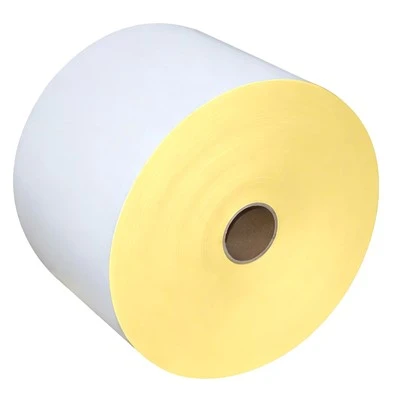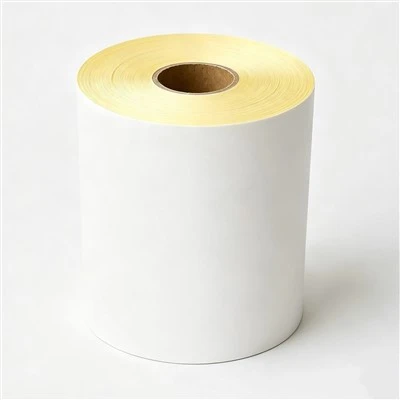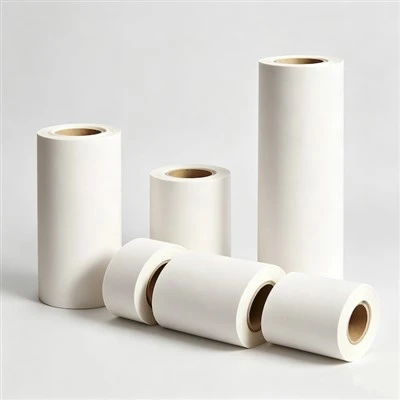


A thermal transfer ribbon is an important consumable used in thermal transfer printing technology. It is mainly applied in barcode printers and label printers, where a heated printhead transfers ink from the ribbon onto the surface of label materials, creating clear and durable text, graphics, barcodes, and QR codes. As a key component of modern label printing systems, thermal transfer ribbons are widely used in logistics, warehousing, retail, manufacturing, healthcare, electronics, and other industries.
Structurally, a thermal transfer ribbon generally consists of three main layers: the base film, ink coating, and back coating. The base film provides structural support and is usually made from polyester film (PET), which offers excellent strength, heat resistance, and dimensional stability. This allows the ribbon to operate smoothly during high-speed printing. The ink coating is located on one side of the base film and serves as the main printing layer. Different ink formulations provide different levels of print quality and durability. The back coating is applied to the opposite side of the film to reduce printhead wear and improve printing stability.
Based on ink composition and application requirements, thermal transfer ribbons are commonly divided into wax ribbons, wax-resin ribbons, and resin ribbons. Wax ribbons provide good print clarity and cost efficiency, making them suitable for standard paper labels, product labels, and logistics labels. Wax-resin ribbons combine the advantages of wax and resin materials, offering improved durability and printing performance for applications requiring greater resistance. Resin ribbons provide excellent resistance to scratches, chemicals, and high temperatures, making them suitable for electronic components, industrial equipment, and demanding environments.
The primary function of a thermal transfer ribbon is to provide high-quality information printing. Compared with conventional printing methods, thermal transfer technology produces sharper and more durable printed results that are less affected by environmental conditions. Labels printed with thermal transfer ribbons can maintain readability for longer periods, meeting requirements for identification and tracking.
In practical applications, thermal transfer ribbons should be selected according to the printer model, label material, and operating environment. For standard paper labels, wax ribbons are often suitable, while plastic film labels or long-term industrial identification labels typically require wax-resin or resin ribbons. Proper ribbon selection improves print quality and helps extend printer service life.
With the development of automated manufacturing, smart logistics, and digital management, thermal transfer ribbons continue to evolve as essential label printing materials. In the future, high-performance and environmentally friendly ribbon solutions designed for intelligent printing systems will provide more reliable and efficient identification solutions for various industries.