

Custom HF/UHF Passive RFID Labels & NFC Tags

RFID label is an adhesive smart tag embedded with RFID chip & antenna, replacing traditional barcode labels.
It enables contactless bulk scanning without line-of-sight, supporting automatic inventory, warehouse management and product traceability.
Available in wet inlay / dry inlay, compatible with paper, PP, pearl film sticker materials for retail, logistics and industrial use.
Frequency & Technical Specs
- UHF (860~960MHz)
Standard:ISO18000-6C / EPC Gen2(EU:865-868MHz;US:902-928MHz;CN:920-925MHz)
Read Range:General sticker 3~8m;Anti-metal customized 1~5m;Mini jewelry tag 0.3~1.5m
Main Chips:NXP UCODE 7/8/9,Impinj Monza R6,Fudan Micro
Memory:TID(96bit fixed unique ID)+EPC(96~128bit)+User Area(0~512bit optional, encryptable)
- HF/NFC (13.56MHz)
Standard:ISO14443A/B,ISO15693
Read Range:0.5~10cm
Chips:NXP MF Ultralight/NTAG213/215/216
No built-in battery,Service life ≥10 years,Repeated read&write >100,000 times
Common face stock for RFID upper label:
Paper series: Coated art paper, thermal paper, fragile paper (low cost, normal indoor use)
Film series: Pearl BOPP, PET, PP synthetic, PVC (waterproof, durable for cosmetic, beverage, industrial goods)
Special: Teslin, fabric for anti-counterfeit & laundry RFID tags.
Adhesive Options :
1 General water-based glue:normal indoor, room temp
2 High temp oil glue:-30℃~120℃, cosmetic/industrial outdoor
3 Low temp freezer glue:-40℃~25℃, cold chain frozen goods
4 Removable glue:no residue after peeling, retail temporary tagging
5 DuPont Tyvek/Non-woven laundry:-20~95℃, ≥50 industrial washing cycles
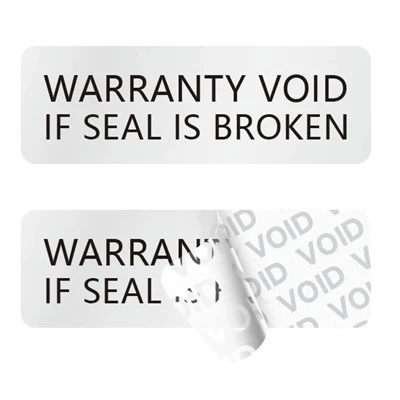
6 Fragile paper:once peeled, label broken completely for anti-counterfeit

We offer One-stop Solution: Inlay Design, Flip-chip Bonding, Converting, Encoding & Custom Printing

|
Application |
1,UHF Apparel & Laundry RFID Tags (Woven/Non-woven Laundry Label, Apparel Hang Tag) Woven/non-woven, ironing resistant up to 180℃, pass industrial laundry detergent test; |
|
2,Cold Chain & Medical RFID Tags (Anti-liquid Wristband, Drug/Vaccine Temperature Sensing RFID Label) Semi-passive optional, temp range -40℃~85℃, auto record storage temperature |
|
|
3,Jewelry & High-value Goods Anti-counterfeit RFID Tags (Mini-size PET Jewelry Label) ltra-small inlay, anti-transfer fragile adhesive |
|
|
4,Logistics & Warehouse UHF RFID Stickers (Express Label, Flexible Anti-metal RFID Tag) With isolation dielectric layer, solve metal signal shielding problem |
|
|
5,Library & Ticket HF RFID Tags (Book Label, Event Ticket/Card) |
|
|
6,Fragile & Unmanned Retail Anti-counterfeit RFID Labels |
|
|
7,LED Light-indicating RFID Search Tag |
|
|
8,Global Industry Application Map (Application Scenario Block, Scenario Picture Grid) |

Customized One-stop Service (Service Advantage Block)
1. Free sample development & pre-production testing within 7 working days
2. Full custom service: exclusive antenna design, customized size/material/adhesive, pre-program EPC/UID/user data, full color CMYK printing, encryption lock for anti-counterfeit
3. Multiple optional face stock: Coated Paper/PET/DuPont Paper/PP Synthetic/Non-woven/Fragile Paper/Thermal/PVC
4.Small MOQ available for prototype trial & bulk mass production for global orders
FAQ
Q: What is an RFID label?
A: An RFID label is a smart label that contains a microchip and antenna. It uses radio waves to automatically identify and track objects without line-of-sight scanning.
Q: 2What is the difference between RFID and barcode?
A: Barcode: Requires direct line of sight to scan
RFID: Can be read without seeing the label
RFID: Supports batch reading of multiple items
RFID: Can store more data and sometimes be rewritten
Barcode: Cheaper, but more limited
Q: What types of RFID tags are there?
A: Main categories:
Passive RFID tags: No battery, most commonly used
Active RFID tags: Battery-powered, longer range
Semi-passive tags: Battery supports chip, communication still passive
Frequency types:
LF (125 kHz)
HF (13.56 MHz, including NFC)
UHF (860–960 MHz, most used in logistics and retail)
Q: How far can RFID be read?
A: Depends on frequency and environment:
HF: A few centimeters to ~1 meter
UHF: Typically 1–10 meters (can be more in ideal conditions)
Strongly affected by antennas, reader power, and interference
Q: Can RFID labels work on metal or liquid surfaces?
A: Yes, but only with special designs:
On-metal RFID tags are required for metal surfaces
Standard tags will not perform well near metal or liquid due to signal interference
Q: Can RFID labels be reused?
A: Disposable tags: Common in logistics and retail
Writable tags (RW): Can be rewritten multiple times depending on chip type and permissions
Q: How much data can an RFID tag store?
A: Usually very limited:
From a few dozen bytes to a few kilobytes
Typically stores an ID number or product code rather than large data
Q: How do I choose the right RFID label?
A: Key factors:
Operating frequency (LF / HF / UHF)
Application environment (metal, water, outdoor, etc.)
Required reading distance
Material (paper, PET, textile, etc.)
Cost and durability requirements
Q: Why do RFID label prices vary so much?
A: Price depends on:
Chip brand and quality
Antenna design complexity
Special features (anti-metal, waterproof, heat resistance)
Custom printing and encoding
Order volume
Q: What industries use RFID labels?
A: Common applications include:
Logistics and supply chain tracking
Retail inventory management
Asset tracking
Apparel tagging
Library systems
Healthcare and medical tracking
Q: What is RFID collision (read interference)?
A: When multiple tags respond at the same time. Modern systems solve this using anti-collision protocols, allowing hundreds of tags to be read simultaneously (especially UHF systems).
Q: Why can't my RFID tag be read?
A: Possible reasons:
Damaged or defective tag
Wrong frequency mismatch
Interference from metal or liquids
Weak reader power or incorrect antenna setup
Tag orientation issues
Q: Why is RFID reading unstable?
A: Common causes:
Electromagnetic interference
Poor tag quality
Inconsistent tag placement
Environmental reflections or shielding effects
Q: Is RFID secure?
A: Basic RFID can be cloned or intercepted in some cases
Higher-security systems use encryption and authentication
Security level depends on chip type and system design
Hot Tags: rfid label, China rfid label manufacturers, suppliers, factory